

Simple Ways to Reduce Stress and Feel Better Every Day
Stress is a normal part of life. Work, studies, family responsibilities, financial concerns, deadlines, and unexpected situations can all make us feel overwhelmed from time to time.
A certain amount of stress can help you respond to challenges, but ongoing or excessive stress can make everyday life more difficult. You may feel tense, tired, distracted, irritable, or unable to properly relax.
The good news is that managing stress doesn’t always require major changes. Small habits such as taking regular breaks, getting enough sleep, moving your body, spending time with people you trust, and making time for relaxation can make your daily routine feel more manageable.
In this article, we’ll explore simple ways to reduce stress, recognize common signs of stress, develop healthier coping habits, and create a calmer daily routine.
What Is Stress?
Stress is your body’s response to situations that feel demanding, challenging, or threatening.
When you experience stress, your body can become more alert and prepared to respond. This can be useful when you need to deal with a short-term challenge.
For example, feeling some pressure before an important presentation may motivate you to prepare.
The problem can arise when stress becomes frequent, intense, or difficult to manage.
Short-Term vs. Ongoing Stress
Short-term stress may occur because of a deadline, exam, presentation, traffic, or unexpected problem.
Ongoing stress can happen when stressful circumstances continue for a long period without enough opportunity to recover.
The experience of stress is different for everyone, so paying attention to your own patterns can be useful.
Common Signs of Stress
Stress doesn’t always feel like simply being “worried.”
It can affect your body, thoughts, emotions, and behavior.
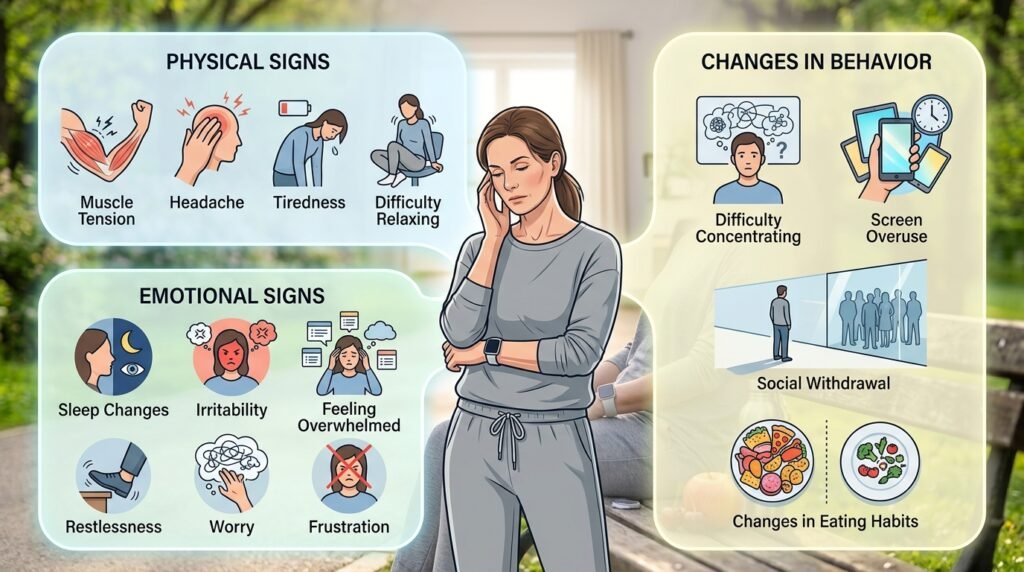
Physical Signs
You may notice:
- Muscle tension
- Headaches
- Tiredness
- Difficulty relaxing
- Changes in sleep
- Changes in appetite
Emotional Signs
Stress can sometimes make you feel:
- Irritable
- Overwhelmed
- Restless
- Worried
- Frustrated
- Emotionally exhausted
Changes in Behavior
You may also notice:
- Avoiding responsibilities
- Difficulty concentrating
- Spending more time on screens
- Withdrawing from people
- Changes in eating habits
- Finding it difficult to switch off from work
One symptom alone doesn’t necessarily mean that stress is the cause. These experiences can have many possible explanations.
10 Simple Ways to Manage Stress
1. Take Short Breaks During the Day
When you’re working or studying for a long time, constantly pushing yourself may leave you feeling mentally exhausted.
Short breaks give you an opportunity to step away from the task and reset.
Try a Simple Break
Every so often:
- Stand up
- Stretch
- Walk around
- Drink some water
- Look away from your screen
- Take a few slow breaths
Even a few minutes can break up a long period of concentration.
2. Practice Slow, Deep Breathing
When you’re stressed, your breathing may become faster or shallower.
Slowing your breathing can be a simple relaxation technique.
Try This
Sit comfortably and:
- Relax your shoulders.
- Breathe in slowly.
- Pause briefly if comfortable.
- Exhale slowly.
- Repeat several times.
Don’t force your breathing or hold your breath for an uncomfortable amount of time.
The goal is simply to slow down and give yourself a moment to pause.
3. Get Regular Physical Activity
Exercise isn’t only useful for physical fitness. It can also provide a healthy way to manage everyday stress.
You don’t need an intense workout.
Try:
- Walking
- Cycling
- Stretching
- Swimming
- Dancing
- Strength exercises
- Playing a sport
Make Movement Easier
If you don’t have time for a full workout, divide your activity into smaller sessions.
A short walk during a busy day can still give you a chance to move and step away from whatever is causing pressure.
4. Prioritize Quality Sleep
Poor sleep can make everyday challenges feel harder to handle.
A consistent sleep routine can give your body and mind time to recover.
Create a Better Nighttime Routine
Try to:
- Go to bed around the same time
- Wake up at a consistent time
- Keep your bedroom comfortable and quiet
- Reduce stimulating activities before bed
- Avoid working in bed when possible
Don’t expect your sleep routine to become perfect overnight. Small improvements can add up.
5. Spend Time With People You Trust
You don’t have to handle every stressful situation alone.
Talking to a friend, family member, colleague, teacher, or another trusted person can help you feel less isolated.
You Don’t Always Need Advice
Sometimes simply talking about what’s bothering you can be helpful.
You can tell someone:
“I don’t need a solution right now. I just need someone to listen.”
Healthy social connections can be an important part of emotional well-being.
6. Spend Time Outdoors
Getting outside can give you a change of environment.
You could:
- Take a walk
- Sit in a park
- Spend time in your garden
- Have lunch outdoors
- Walk in a quiet neighborhood
You don’t have to turn every outdoor activity into exercise.
Sometimes simply changing your surroundings can provide a useful mental break.
7. Organize Your Tasks
A long list of unfinished tasks can make stress feel worse.
Instead of trying to remember everything at once, write down what needs to be done.
Use Three Categories
Today:
Tasks that genuinely need attention now.
This Week:
Important tasks that don’t need to be completed today.
Later:
Tasks that can wait.
This simple system can make a large workload feel more manageable.
8. Learn to Say No When Necessary
Trying to handle everything can quickly become overwhelming.
You don’t have to accept every request, invitation, or responsibility.
A Simple Response
You can say:
“I can’t take this on right now.”
You don’t always need to provide a long explanation.
Setting reasonable boundaries can protect your time and energy.
9. Limit Constant Screen Checking
Phones and social media can make it difficult to mentally switch off.
Checking messages every few minutes can keep your attention divided throughout the day.
Try Creating Screen-Free Periods
For example:
- During meals
- While talking with family
- During your morning routine
- 30–60 minutes before bed
- During a walk
You don’t have to completely avoid technology. The goal is to create moments when your attention isn’t constantly being pulled somewhere else.
10. Make Time for Activities You Enjoy
Stress management isn’t only about removing stressful things.
It’s also about making room for activities that make your life enjoyable.
Try:
- Reading
- Cooking
- Drawing
- Gardening
- Listening to music
- Watching a favorite show
- Spending time with friends
- Playing a sport
- Working on a hobby
Enjoyable activities give your brain a break from constant problem-solving.
Healthy vs. Unhealthy Stress Habits
When people feel stressed, they may automatically turn to habits that provide quick relief but don’t help in the long run.
| Stressful Situation | Healthier Response | Less Helpful Response |
| Overloaded with work | Break tasks into smaller steps | Ignore everything |
| Feeling tense | Take a walk or breathe slowly | Stay inactive for hours |
| Feeling overwhelmed | Talk to someone you trust | Isolate yourself completely |
| Trouble relaxing | Try a calming activity | Constantly scroll social media |
| Poor sleep | Build a consistent bedtime routine | Stay up very late repeatedly |
| Busy schedule | Prioritize important tasks | Try to do everything at once |
| Emotional eating | Pause and identify what you need | Automatically eat large amounts |
| Frustration | Take a short break | React immediately in anger |
The goal isn’t to respond perfectly every time. Healthy coping is something you can gradually practice.
How Exercise Helps With Stress
Physical activity can be an effective part of stress management.
When you’re active, you temporarily shift your attention toward movement and away from whatever is occupying your mind.
You Don’t Need a Gym
A stress-relieving activity could be as simple as:
10-minute walk → shower → relaxing evening
Or:
15-minute home workout → water → short break
Choose something realistic enough that you’ll actually do it.
How Food and Hydration Can Affect Your Routine
Stress can sometimes affect eating habits.
Some people lose their appetite, while others reach for highly processed or sugary foods more often.
A balanced eating pattern can help support your overall health.
Include a variety of:
- Vegetables
- Fruits
- Whole grains
- Protein-rich foods
- Healthy fats
- Fluids
Don’t Forget Water
Being busy or stressed can make it easy to forget to drink.
Keep water nearby and make drinking fluids part of your normal routine.
Managing Stress at Work or School
Work and study are common sources of daily pressure.
You don’t always have control over your workload, but you may be able to change how you organize it.
Prioritize Your Most Important Task
Instead of starting ten things at once, identify what matters most.
Break Large Projects Into Steps
Rather than:
“Finish the entire project.”
Think:
- Research
- Outline
- First section
- Review
- Final edits
Smaller steps can feel less overwhelming.
Take Regular Breaks
Long periods without movement can leave you mentally and physically drained.
Get up, stretch, walk around, or simply step away from your screen for a few minutes.
Creating a Simple Daily Stress-Management Routine
You don’t need an hour-long meditation routine.
Try a few small habits throughout the day.
Morning
- Drink water
- Avoid immediately checking every notification
- Identify your main priorities
During the Day
- Take short breaks
- Move your body
- Eat regular balanced meals
- Stay connected with people
Evening
- Reduce unnecessary screen time
- Do something enjoyable
- Prepare for tomorrow
- Give yourself time to relax
Before Bed
- Keep your routine calm
- Put work aside when possible
- Follow a consistent sleep schedule
Small habits are easier to maintain than complicated routines.
A 10-Minute Stress Reset
When you feel overwhelmed, try this simple sequence.
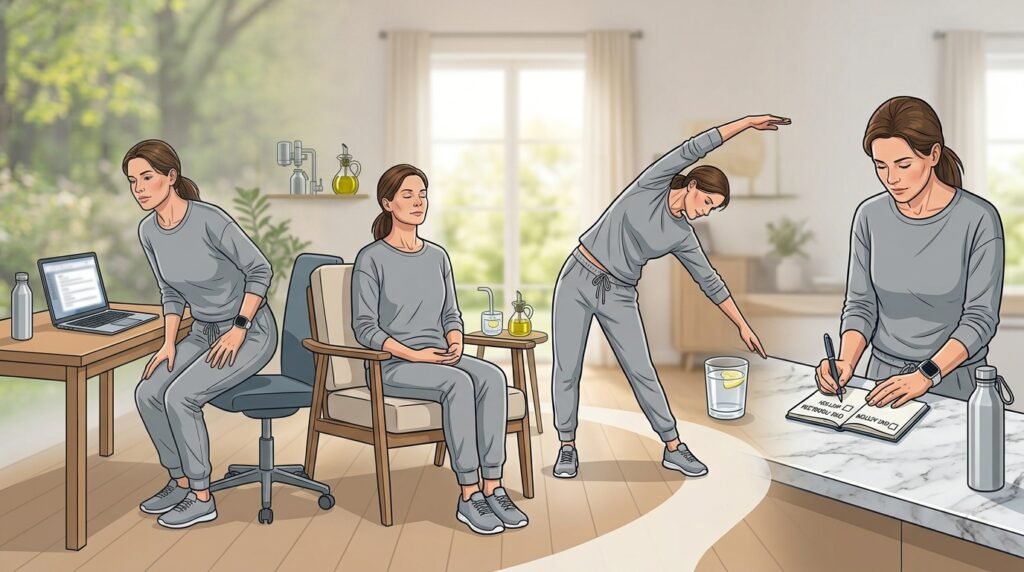
Minute 1–2: Pause
Stop what you’re doing if possible.
Minute 3–4: Breathe
Take slow, comfortable breaths.
Minute 5–7: Move
Walk around or gently stretch.
Minute 8–9: Identify the Problem
Ask yourself:
“What is the one thing I need to deal with first?”
Minute 10: Take One Small Action
Choose one realistic next step.
You don’t have to solve everything at once.
Common Stress-Management Mistakes
Trying to Eliminate All Stress
Stress is a normal part of life. The goal isn’t to create a completely stress-free life.
The goal is to develop healthier ways of responding to challenges.
Ignoring Stress for Too Long
Continuously pushing through exhaustion without addressing what’s causing it can make things harder.
Pay attention when stress begins interfering with your everyday life.
Using Unhealthy Habits for Quick Relief
Alcohol, excessive screen use, overeating, or other harmful coping behaviors may provide temporary distraction but can create additional problems.
Making Your Routine Too Complicated
If your stress-management plan takes an hour to complete, you may stop doing it when life gets busy.
Keep your habits simple.
Comparing Your Stress With Someone Else’s
Everyone responds to challenges differently.
You don’t have to prove that your stress is “bad enough” before taking care of yourself.
When Should You Seek Professional Help?
Sometimes stress becomes difficult to manage on your own.
Consider speaking with a qualified mental-health professional or healthcare provider if stress:
- Continues for a long time
- Significantly interferes with daily life
- Makes it difficult to work or study
- Seriously affects your sleep
- Causes persistent feelings of hopelessness
- Makes you withdraw from people
- Leads to harmful coping behaviors
If you feel unable to stay safe or are having thoughts of harming yourself, seek immediate help from local emergency services or a crisis service in your area.
Asking for help isn’t a weakness. Professional support can provide practical strategies and a safe place to discuss what you’re experiencing.
Frequently Asked Questions
1. What is the best way to reduce stress?
There isn’t one solution that works for everyone. Regular physical activity, adequate sleep, social support, relaxation techniques, healthy routines, and better time management can all help.
2. Can walking reduce stress?
Walking can provide physical activity, a change of environment, and a break from work or other responsibilities. Many people find a short walk relaxing.
3. Does stress affect sleep?
Yes. Stress can make it harder to relax and fall asleep for some people. A consistent sleep routine and calming evening habits may help.
4. Can deep breathing help with stress?
Slow, comfortable breathing can be a simple relaxation technique. It can give you a moment to pause when you’re feeling tense.
5. How can I reduce stress at work?
Prioritize important tasks, break large projects into smaller steps, take short breaks, and avoid trying to handle everything simultaneously.
6. Is screen time related to stress?
Constant notifications, social media, and work messages can make it harder to disconnect. Creating screen-free periods can give your mind more time to rest.
7. Can exercise help with stress?
Regular physical activity can support mental well-being and provide a healthy way to manage everyday tension. Choose an activity that fits your fitness level and preferences.
8. How can I relax quickly?
Try stepping away from the stressful situation if possible, taking slow breaths, stretching, walking briefly, or talking to someone you trust.
9. Is all stress bad?
No. Short-term stress can sometimes help you stay alert and respond to challenges. Problems are more likely when stress becomes excessive, persistent, or difficult to manage.
10. When should I get help for stress?
If stress is persistent, significantly affects your daily life, disrupts sleep, interferes with work or relationships, or becomes difficult to manage, consider speaking with a qualified professional.
Conclusion
Stress is an unavoidable part of life, but you don’t have to let it control every part of your day.
Simple habits can make a meaningful difference. Take regular breaks, move your body, get enough sleep, stay connected with people you trust, organize your responsibilities, and make time for activities you enjoy.
You don’t need to change everything at once.
Start with one small habit. Take a short walk. Put your phone away for a while. Take a few slow breaths. Talk to someone you trust. Give yourself permission to rest.
Over time, these small choices can become a healthier way of dealing with everyday pressure.
And remember: asking for professional support when stress becomes difficult to manage is a healthy step, not a failure.