How to Build a Healthy and Balanced Diet
Eating healthy doesn’t mean that every meal has to be perfect. A balanced diet is really about giving your body a good variety of foods and making nutritious choices most of the time.
Your body needs different nutrients to support energy, muscles, bones, the immune system, and many other everyday functions. That’s why eating the same few foods every day isn’t the best approach. Variety matters.
A balanced diet can be simple. You can start with familiar foods, make a few smart swaps, add more vegetables and fruit, and pay attention to portion sizes.
In this guide, we’ll explain what a balanced diet is, which foods to include, how to build a healthy plate, and practical ways to improve your everyday meals without following a complicated diet.
What Is a Balanced Diet?
A balanced diet provides a variety of nutrients from different types of foods.
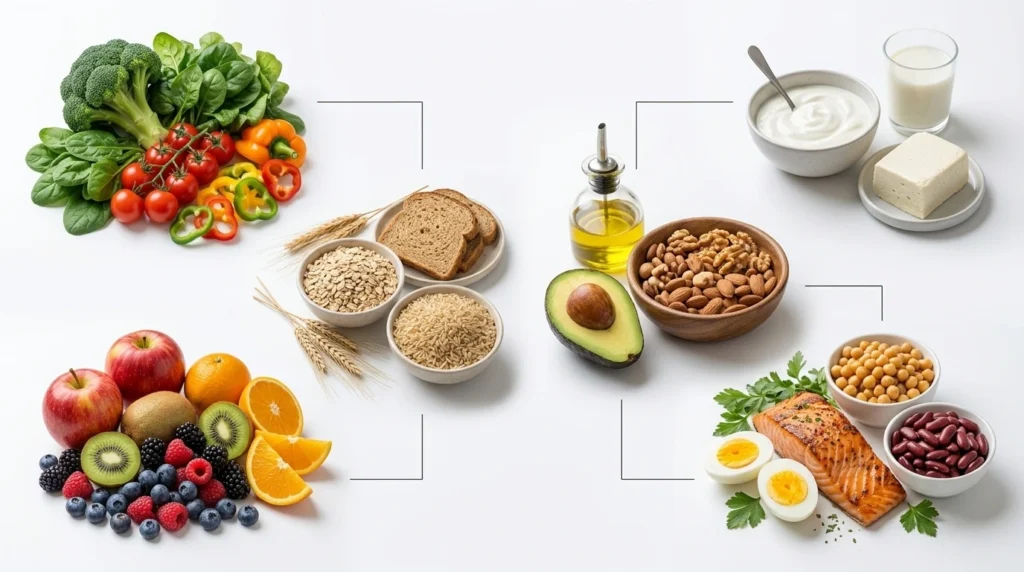
Instead of focusing on one particular food or eliminating entire food groups without a reason, the idea is to create meals that include a useful combination of:
- Vegetables
- Fruits
- Whole grains
- Protein-rich foods
- Healthy fats
- Dairy or suitable alternatives
- Water and other healthy beverages
Your exact nutritional needs depend on factors such as age, activity level, and individual health needs.
Balance Is About Your Overall Eating Pattern
One meal doesn’t determine whether your diet is healthy.
For example, having a less nutritious meal occasionally doesn’t mean you’ve ruined your diet. What matters more is what your eating pattern looks like over days and weeks.
The Main Parts of a Healthy Diet
1. Vegetables
Vegetables provide a wide range of vitamins, minerals, fiber, and other beneficial nutrients.
Try to include different colors and types rather than eating the same vegetable every day.
Easy Ways to Eat More Vegetables
Add vegetables to:
- Omelets
- Soups
- Sandwiches
- Rice dishes
- Pasta
- Salads
- Wraps
- Stir-fries
Frozen and canned vegetables can also be useful. When buying canned vegetables, checking the sodium content can help you choose a better option.
2. Fruits
Fruit is an easy way to add nutrients and natural sweetness to your meals.
Good options include:
- Apples
- Bananas
- Oranges
- Berries
- Mangoes
- Pears
- Melons
Whole Fruit vs. Fruit Juice
Whole fruit generally provides more fiber than fruit juice.
Instead of drinking a large glass of juice, consider eating a piece of whole fruit and having water alongside it.
3. Whole Grains
Grains provide carbohydrates, which are an important source of energy.
Whole-grain choices include:
- Oats
- Brown rice
- Whole-grain bread
- Whole-grain pasta
- Barley
- Whole-grain cereals
When possible, choose whole grains more often than refined grain products.
Simple Food Swap
Instead of:
White bread → Whole-grain bread
Instead of:
Refined cereal → Oatmeal or a whole-grain cereal
Small changes like these are often easier to maintain than completely changing your diet.
4. Protein-Rich Foods
Protein helps your body build and maintain muscles and supports many important body functions.
Protein can come from both animal and plant sources.
Good Protein Choices
Consider:
- Fish
- Eggs
- Chicken
- Beans
- Lentils
- Chickpeas
- Nuts
- Seeds
- Yogurt
- Tofu
You don’t need to rely on one source. Mixing different protein foods throughout the week adds variety to your meals.
5. Healthy Fats
Fat is an important part of a balanced diet. The goal isn’t to avoid all fat, but to choose healthier sources more often.
Examples include:
- Avocado
- Nuts
- Seeds
- Olive oil
- Fatty fish
- Nut butters
These foods can add flavor and make meals more satisfying.
Don’t Overlook Portion Size
Healthy fats are still relatively high in calories, so you don’t need large amounts.
A small amount of olive oil, nuts, or avocado can be enough.
6. Dairy and Alternatives
Milk, yogurt, cheese, and suitable fortified alternatives can contribute nutrients such as protein and calcium.
If you don’t consume dairy, alternatives such as fortified soy beverages can be useful options.
When choosing packaged products, compare labels for added sugar and other ingredients.
How to Build a Healthy Plate
You don’t have to weigh every ingredient to make a balanced meal.
A simple plate method can help you think about variety.
A Simple Plate Structure
About half:
Vegetables and/or fruit
About one-quarter:
Whole grains or another nutrient-rich carbohydrate
About one-quarter:
Protein such as fish, beans, lentils, eggs, or lean poultry
Then add a modest amount of healthy fat if appropriate.
This isn’t a strict rule for every meal. It’s simply an easy visual guide for creating more balanced meals.
Healthy Food Choices: A Quick Comparison
| Instead of Choosing Mostly | Try Choosing More Often |
| White bread | Whole-grain bread |
| Sugary cereal | Oats or low-sugar whole-grain cereal |
| Sugary drinks | Water or unsweetened drinks |
| Deep-fried foods | Baked or grilled foods |
| Processed meat | Fish, beans or lean protein |
| Salty packaged snacks | Unsalted nuts or fresh fruit |
| Heavy creamy sauces | Vegetable-based or lighter sauces |
| Large dessert portions | Fruit or smaller portions |
You don’t have to completely eliminate the foods in the left column. The idea is simply to make the options on the right more common in your everyday routine.
Why Variety Matters in a Healthy Diet
Eating a wide range of foods makes it easier to get different nutrients.
For example, instead of eating only one type of vegetable, rotate between:
- Spinach
- Carrots
- Tomatoes
- Broccoli
- Bell peppers
- Cauliflower
The same idea applies to protein and grains.
Try a Weekly Variety
You could have:
Monday: Lentils
Tuesday: Fish
Wednesday: Chicken
Thursday: Beans
Friday: Eggs
Weekend: Another protein you enjoy
There’s no requirement to follow this exact schedule. It’s simply an easy way to avoid eating the same thing repeatedly.
How Much Should You Eat?
A healthy diet isn’t only about what you eat. The amount you eat matters too.
Portion needs vary from person to person, so there isn’t one perfect serving size for everyone.
Simple Portion Tips
Try:
- Using a normal-sized plate
- Eating slowly
- Paying attention to hunger and fullness
- Avoiding eating directly from large snack packages
- Serving food onto a plate rather than eating from the container
You don’t need to count every calorie to develop healthier eating habits.
How to Create a Balanced Breakfast
Breakfast can be simple.
Instead of relying mainly on sugary foods, try combining several food groups.
Example Breakfast
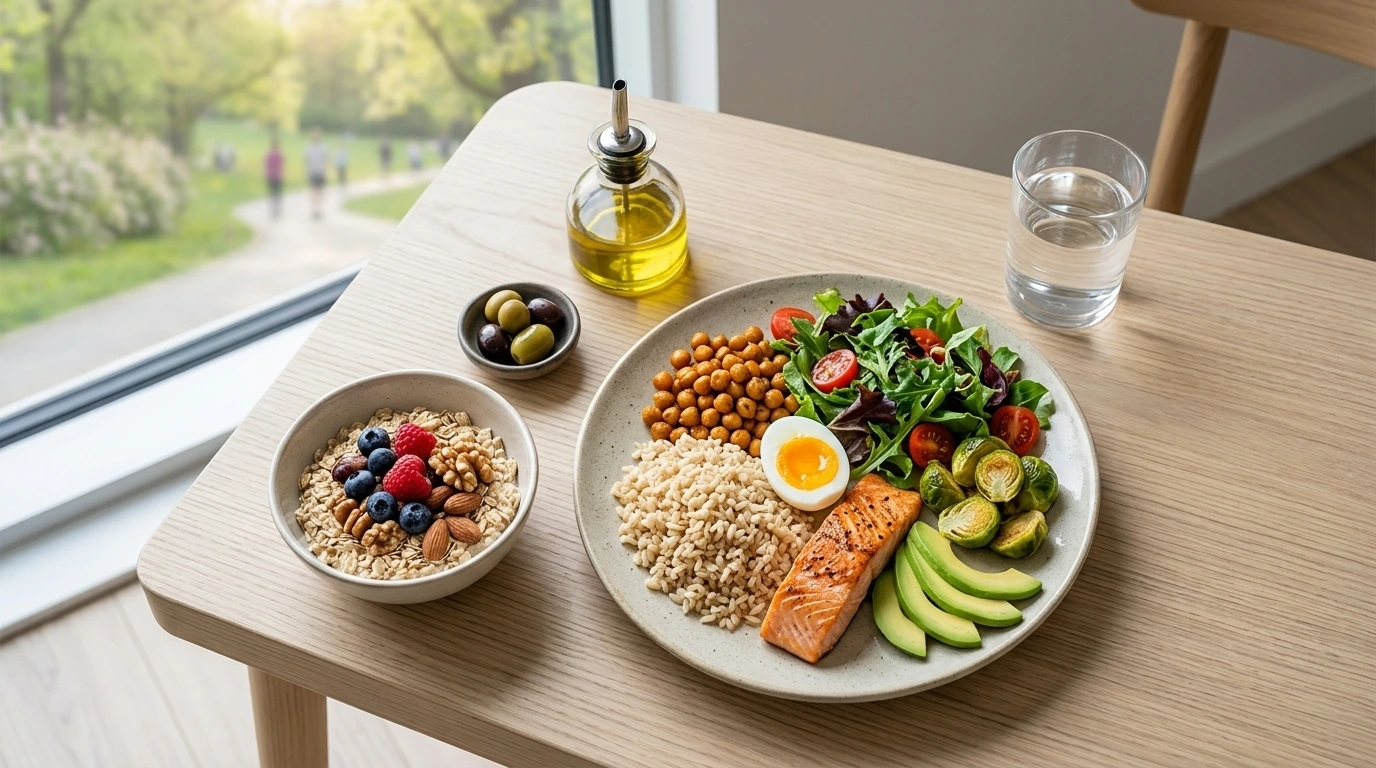
Oatmeal + berries + walnuts + plain yogurt
This combination provides whole grains, fruit, protein, and healthy fats.
Other Ideas
- Whole-grain toast + eggs + fruit
- Plain yogurt + berries + oats
- Vegetable omelet + whole-grain toast
- Oatmeal + banana + nuts
Choose foods you actually enjoy so your healthy routine is easier to maintain.
How to Create a Healthy Lunch
Lunch doesn’t need to be complicated either.
Example Lunch
Brown rice + chickpeas + vegetables + avocado
You can change the ingredients depending on what you have available.
Quick Lunch Combinations
- Grilled chicken + salad + whole-grain bread
- Lentil soup + vegetables + whole-grain toast
- Tuna + salad + brown rice
- Chickpea wrap + vegetables + yogurt
Preparing some ingredients ahead of time can make lunch much easier on busy days.
How to Create a Balanced Dinner
Dinner can follow the same basic idea.
Example Dinner
Baked fish + brown rice + mixed vegetables
You can replace fish with beans, lentils, chicken, tofu, or another protein source.
A Simple Dinner Formula
Protein + vegetables + whole grain or other carbohydrate + healthy fat
This gives you a flexible framework rather than a strict recipe.
Healthy Snacks That Are Easy to Prepare
Snacks can help fill the gap between meals, but they don’t have to come from a packet.
Try:
- Apple + unsalted nuts
- Plain yogurt + berries
- Carrot sticks + hummus
- Banana + peanut butter
- Fresh fruit
- A small handful of unsalted nuts
- Whole-grain toast + avocado
A Simple Snack Rule
Try combining two different food groups, such as fruit plus nuts or vegetables plus hummus.
This can make a snack more satisfying.
How to Make Your Diet Healthier Without Spending a Lot
Eating well doesn’t have to mean buying expensive specialty foods.
Choose Affordable Staples
Useful budget-friendly foods include:
- Oats
- Beans
- Lentils
- Eggs
- Brown rice
- Seasonal vegetables
- Bananas
- Apples
- Plain yogurt
Buy According to the Season
Seasonal produce can sometimes be more affordable and easier to find.
Cook Larger Batches
Prepare a larger amount of rice, beans, lentils, or vegetables and use them across several meals.
This can save both time and money.
How to Read Food Labels
Food labels can help you compare products.
When buying packaged foods, pay attention to:
- Serving size
- Sodium
- Added sugars
- Saturated fat
- Protein
- Fiber
Don’t judge a product based on one number alone. Look at the overall nutrition information and ingredient list.
A Useful Habit
When comparing two similar products, choose the option that better fits your nutritional goals rather than automatically choosing the one with the biggest “healthy” claim on the front of the package.
Foods to Limit
A balanced diet doesn’t require banning foods.
However, foods that are high in added sugar, sodium, saturated fat, or heavily processed ingredients are generally better kept as occasional choices.
These may include:
- Sugary soft drinks
- Highly processed snacks
- Processed meats
- Very salty packaged meals
- Foods with large amounts of added sugar
- Frequently fried foods
Think About Frequency
Having a dessert occasionally is different from having sugary desserts several times every day.
The goal is to create a pattern that is nutritious most of the time while still being realistic.
Common Healthy Eating Mistakes
1. Trying to Change Everything at Once
A complete diet makeover can feel overwhelming.
Start with one or two changes and build gradually.
2. Skipping Meals to “Save Calories”
Skipping meals can leave you extremely hungry later and may make it harder to make thoughtful food choices.
3. Focusing Only on Calories
Calories matter, but the nutritional quality of food matters too.
Two foods can have similar calorie amounts while providing very different nutrients.
4. Believing Every “Healthy” Label
Words such as “natural,” “light,” or “healthy” on packaging don’t tell you everything.
Check the nutrition facts and ingredients.
5. Forgetting About Drinks
People sometimes focus heavily on food while overlooking beverages.
Sugary drinks can add a significant amount of added sugar to your daily intake.
A Simple One-Day Balanced Meal Example
Here’s an example of how different food groups can fit together during a day.
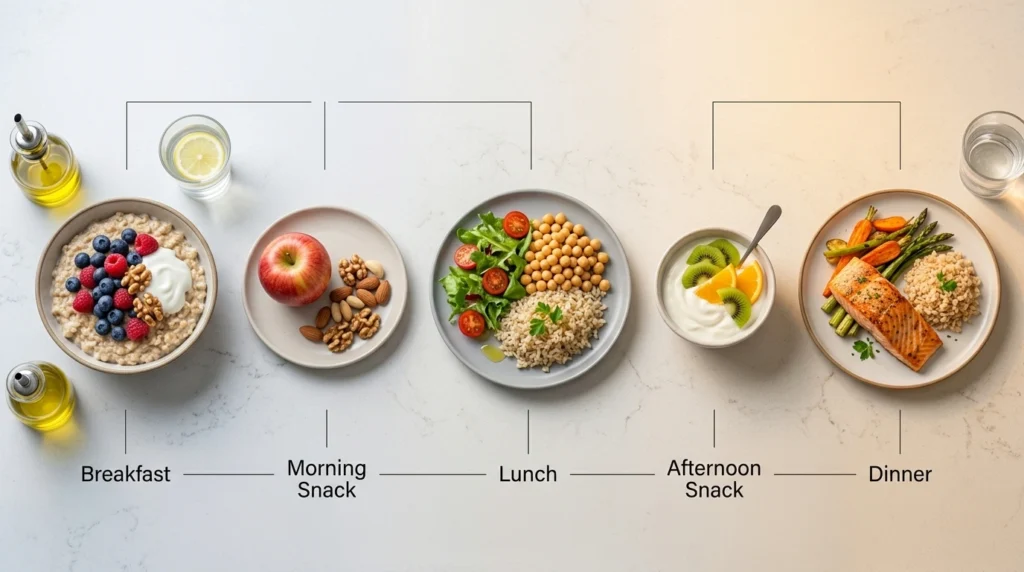
| Meal | Example |
| Breakfast | Oatmeal, berries, walnuts and plain yogurt |
| Morning Snack | Apple and a small handful of unsalted nuts |
| Lunch | Brown rice, chickpeas, leafy greens and tomatoes |
| Afternoon Snack | Plain yogurt with fruit |
| Dinner | Baked fish, vegetables and brown rice |
| Drink | Water throughout the day |
This is only an example, not a required meal plan. Your food choices can vary according to your culture, preferences, budget, and nutritional needs.
7 Practical Tips for Building a Better Diet
1. Add Before You Remove
Instead of immediately thinking about foods you need to stop eating, first ask:
“What nutritious food can I add to this meal?”
Add vegetables, fruit, whole grains, or a healthy protein source.
2. Keep Healthy Ingredients Ready
Wash fruit, prepare vegetables, or cook grains ahead of time.
Convenience makes healthy choices easier.
3. Drink More Water
Keep a water bottle nearby so you don’t have to remember to drink water every time.
4. Make One Better Choice at a Time
Choose whole-grain bread today. Add vegetables tomorrow. Replace a sugary drink the next day.
Small improvements can become lasting habits.
5. Eat More Mindfully
Slow down and pay attention to your food instead of always eating while watching TV or scrolling on your phone.
6. Don’t Aim for Perfection
A healthy diet should fit your real life.
There will be birthdays, restaurants, holidays, and busy days. That’s normal.
7. Enjoy Your Food
Healthy eating is much easier to maintain when your meals taste good and include foods you actually like.
Frequently Asked Questions
1. What is a balanced diet?
A balanced diet includes a variety of foods that provide important nutrients, including vegetables, fruits, whole grains, protein-rich foods, and healthy sources of fat.
2. What should a healthy plate look like?
A simple approach is to fill about half your plate with vegetables and/or fruit, then include a protein source and a whole grain or other nutrient-rich carbohydrate.
The exact proportions don’t have to be identical at every meal.
3. Do I need to stop eating carbohydrates?
No. Carbohydrates are an important source of energy. Instead of eliminating them, consider choosing nutrient-rich carbohydrate sources such as whole grains, fruits, vegetables, and legumes more often.
4. Can I eat fats on a healthy diet?
Yes. Your body needs fat. Foods such as avocado, nuts, seeds, olive oil, and some fish provide healthier types of fat.
5. Is fruit healthy even though it contains sugar?
Whole fruit contains naturally occurring sugar along with fiber, vitamins, minerals, and other nutrients. Whole fruit can be part of a balanced diet.
6. How much water should I drink?
Water needs vary depending on factors such as age, activity, climate, and other individual circumstances. Drink regularly throughout the day and pay attention to your body’s needs.
7. Do I need to count calories to eat healthy?
Not necessarily. Calorie awareness can be useful for some people, but a balanced diet can also be built by focusing on food quality, variety, portions, and hunger and fullness cues.
8. Are healthy foods always expensive?
No. Foods such as oats, beans, lentils, eggs, seasonal produce, and brown rice can be relatively affordable.
9. Can I eat unhealthy food sometimes?
Yes. A balanced diet is about your overall pattern. An occasional treat doesn’t cancel out your other healthy choices.
10. How can I start eating healthier today?
Start with one simple change. Add vegetables to your next meal, choose whole-grain bread, have fruit instead of a sugary snack, or replace a sugary drink with water.
Conclusion
Building a healthy and balanced diet doesn’t require perfection, expensive ingredients, or a complicated meal plan.
Focus on variety. Include plenty of vegetables and fruits, choose whole grains more often, add different protein sources, and use healthier fats in sensible amounts.
At the same time, pay attention to foods that are high in added sugar, sodium, saturated fat, and heavily processed ingredients.
Most importantly, make changes that you can actually maintain.
A healthier diet isn’t created by one perfect meal. It’s built through the small choices you make again and again.
Start with one change today, keep it simple, and build your healthy eating habits from there.