

How Regular Exercise Can Improve Your Overall Health
Exercise doesn’t have to mean spending hours at the gym or following a difficult workout program. Something as simple as walking, cycling, stretching, dancing, or doing bodyweight exercises can add more movement to your day.
Regular physical activity can benefit much more than your appearance. It can support your heart, muscles, bones, mood, sleep, energy levels, and overall physical fitness.
The key is finding activities you enjoy and choosing a routine that fits your lifestyle. You don’t have to become an athlete to benefit from being active.
In this article, we’ll explore how regular exercise can improve your overall health, the different types of exercise, how much activity adults generally need, and practical ways to get started.
What Is Regular Exercise?
Exercise is planned or structured physical activity that makes your body move and requires energy.
It can include many different activities, such as:
- Walking
- Cycling
- Swimming
- Jogging
- Dancing
- Strength training
- Stretching
- Sports
- Bodyweight exercises
You don’t need to choose just one activity. Combining different types can make your routine more interesting and help you work on different aspects of fitness.
Why Is Regular Exercise Important?
Your body is designed to move.
Spending most of the day sitting and doing very little physical activity can make it harder to maintain fitness. Regular movement gives your body opportunities to work your muscles, challenge your cardiovascular system, and develop physical endurance.
Exercise can also become an important part of a broader healthy lifestyle that includes nutritious food, sufficient sleep, hydration, and stress management.
10 Benefits of Regular Exercise
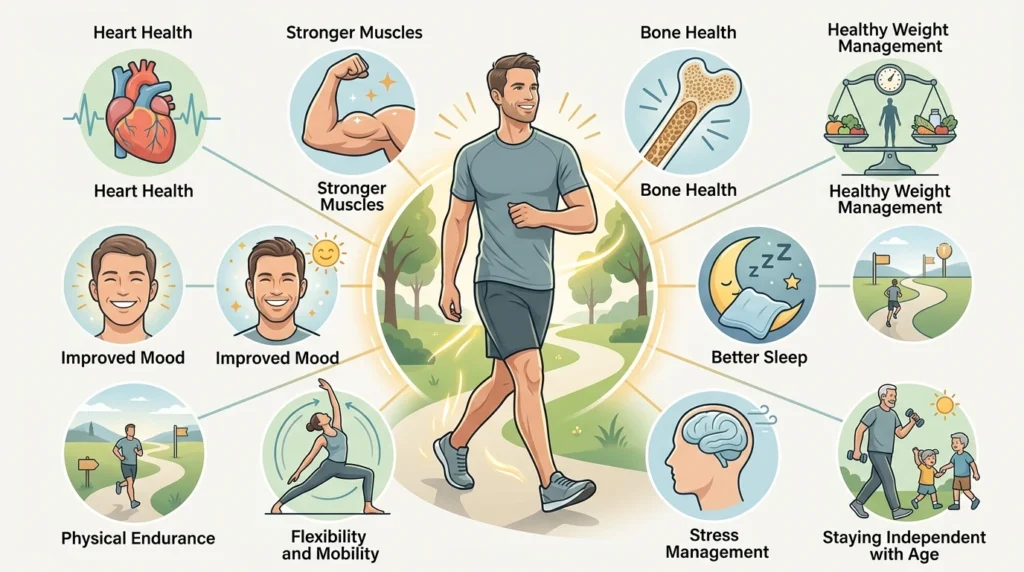
1. Supports Heart Health
When you exercise, your heart works harder to supply your muscles with blood and oxygen.
Over time, regular physical activity can help improve cardiovascular fitness and support overall heart health.
Good Activities for Cardiovascular Fitness
Examples include:
- Brisk walking
- Cycling
- Swimming
- Jogging
- Dancing
- Aerobic classes
You don’t need to exercise intensely every day. Regular moderate activity can also be valuable.
2. Helps Build Stronger Muscles
Strength doesn’t only matter for athletes.
Strong muscles can help with everyday activities such as carrying groceries, climbing stairs, lifting objects, and maintaining good physical function.
Strength Exercises Can Include
- Squats
- Lunges
- Push-ups
- Resistance-band exercises
- Weight training
- Bodyweight exercises
If you’re new to strength training, begin with manageable resistance and focus on learning proper movement.
3. Supports Bone Health
Weight-bearing and resistance activities can help support strong bones.
Walking, climbing stairs, dancing, and resistance exercises are examples of activities that put useful demands on your body.
Keep It Consistent
You don’t need an extremely intense workout to support an active lifestyle. Regular movement is more realistic for most people than occasional extreme exercise.
4. Helps With Healthy Weight Management
Physical activity uses energy and can contribute to maintaining a healthy weight.
However, exercise isn’t a magic solution for weight loss. Your diet, sleep, genetics, medications, and other factors can also influence body weight.
A Better Approach
Think about exercise as one part of your overall health rather than using it only as a tool to change your weight.
Regular activity can help you become fitter and stronger even when the number on the scale doesn’t change significantly.
5. Can Improve Mood
Exercise can be a useful way to take a break from work, studying, or other daily responsibilities.
Physical activity is associated with better mental well-being, and many people find that moving their body helps them feel more refreshed.
Make Exercise Enjoyable
You don’t have to force yourself to do an activity you dislike.
Try:
- Dancing to your favorite music
- Walking outdoors
- Playing a sport
- Cycling with friends
- Swimming
- Joining a group class
An activity you enjoy is often easier to continue.
6. May Support Better Sleep
Regular physical activity can be part of a healthy sleep routine.
Being active during the day may help some people sleep more comfortably at night.
One Thing to Consider
If exercising very close to bedtime makes you feel energized rather than relaxed, try moving your workout earlier.
7. Improves Physical Endurance
When you exercise regularly, everyday physical activities may become easier.
You may find that:
- Walking longer distances feels easier
- Stairs don’t leave you as tired
- You can stay active for longer
- Recovery after normal activity improves
This gradual improvement is one of the rewarding parts of developing a consistent exercise routine.
8. Supports Flexibility and Mobility
Activities such as stretching, yoga, and mobility exercises can help you move more comfortably.
Flexibility isn’t just about being able to touch your toes. Good mobility can make everyday movements easier.
Add Simple Movement
Try gentle stretches for areas that tend to feel stiff, especially if you spend long periods sitting.
Avoid forcing a stretch into pain.
9. Can Help Manage Stress
Exercise can provide a healthy break when your mind feels overloaded.
A short walk, light workout, or stretching session can give you time away from your desk or other responsibilities.
Try a Short Activity Break
If you don’t have time for a full workout, take 10 minutes to:
- Walk
- Stretch
- Climb stairs
- Do light bodyweight exercises
A short session is still movement.
10. Helps You Stay Independent as You Age
Maintaining strength, balance, endurance, and mobility becomes increasingly useful as you get older.
Regular physical activity can help support your ability to perform everyday tasks independently.
Build Fitness Gradually
Starting healthy movement habits earlier can make it easier to maintain an active lifestyle over the years.
How Much Exercise Do You Need?
For general health, adults are commonly advised to aim for at least 150 minutes of moderate-intensity aerobic physical activity per week, or an equivalent combination of moderate and vigorous activity.
Adults are also generally advised to perform muscle-strengthening activities on at least two days each week.
These recommendations are useful targets, but you don’t have to reach them immediately.
A Simple Weekly Example
| Day | Activity |
| Monday | 30-minute brisk walk |
| Tuesday | Strength training |
| Wednesday | 30-minute cycling or walking |
| Thursday | Light stretching or easy activity |
| Friday | 30-minute brisk walk |
| Saturday | Strength training + short walk |
| Sunday | Relaxed walk or rest |
This is only an example. Your routine can look completely different.
If you’re currently inactive, start with smaller amounts and gradually build up.
Types of Exercise
Different forms of exercise train different aspects of fitness.
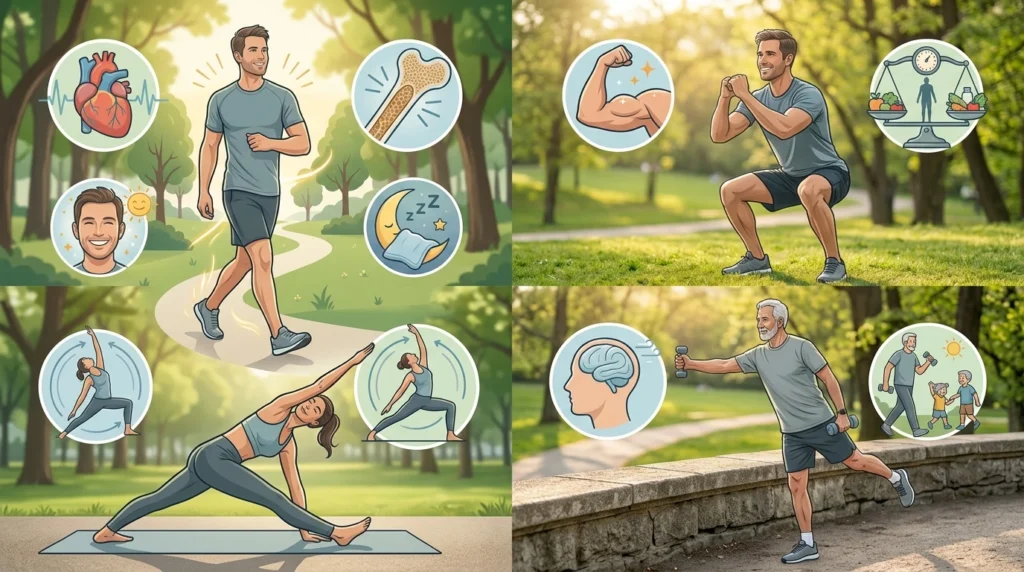
1. Aerobic Exercise
Aerobic activities make your heart and breathing work harder.
Examples:
- Walking
- Cycling
- Swimming
- Jogging
- Dancing
These activities are useful for cardiovascular fitness.
2. Strength Training
Strength exercises challenge your muscles.
Examples include:
- Weight lifting
- Resistance bands
- Push-ups
- Squats
- Lunges
You can perform many strength exercises at home without expensive equipment.
3. Flexibility Exercises
Stretching and flexibility activities can help you maintain comfortable movement.
Examples:
- Gentle stretching
- Yoga
- Mobility exercises
These can be especially useful as part of a balanced exercise routine.
4. Balance Exercises
Balance becomes increasingly important as we age.
Examples include:
- Standing on one foot
- Certain yoga movements
- Controlled balance exercises
If you’re practicing balance, choose a safe environment and have something stable nearby if needed.
Exercise Types: Quick Comparison
| Type of Exercise | Main Focus | Examples | Beginner Friendly? |
| Aerobic | Heart and endurance | Walking, cycling, swimming | Yes |
| Strength | Muscles and strength | Squats, weights, push-ups | Yes |
| Flexibility | Range of movement | Stretching, yoga | Yes |
| Balance | Stability and coordination | Balance exercises, yoga | Yes |
| Mixed Activities | Several areas together | Sports, fitness classes | Depends on activity |
A balanced exercise routine can include more than one category.
How to Start Exercising as a Beginner
Starting is often harder than continuing.
If you’re not used to exercise, don’t feel pressured to complete a demanding workout immediately.
Step 1: Choose an Activity You Enjoy
Walking is an excellent starting point for many people because it requires little equipment.
But if you enjoy cycling, swimming, dancing, or another activity, start there.
Step 2: Keep Your First Workouts Short
Try 10–15 minutes rather than aiming for an hour.
Once that feels comfortable, gradually increase the duration.
Step 3: Create a Schedule
Choose specific days and times for exercise.
For example:
Monday, Wednesday, Friday → 20-minute walk
Having a planned time makes it easier to turn exercise into a habit.
Step 4: Increase Gradually
Don’t dramatically increase your workout duration or intensity from one week to the next.
Give your body time to adapt.
How to Make Exercise Part of Your Daily Routine
You don’t always need a separate “workout hour.”
Look for opportunities to move throughout the day.
Try These Ideas
- Walk during phone calls
- Take the stairs when practical
- Walk to nearby places
- Take movement breaks while working
- Stretch after sitting for a long time
- Play actively with children
- Do short home workouts
- Walk after dinner
These small choices can complement your planned exercise sessions.
Exercise at Home
You don’t need a gym to become more active.
Simple Home Workout
You could start with:
- Bodyweight squats
- Wall push-ups
- Glute bridges
- Marching in place
- Gentle stretching
Perform movements at a comfortable pace and focus on good form.
If an exercise causes pain rather than normal muscle effort, stop and reassess.
Exercise and Nutrition
Exercise and food work together.
Your body needs adequate nutrition to support daily activity and recovery.
A Balanced Approach
Include a variety of:
- Fruits
- Vegetables
- Whole grains
- Protein-rich foods
- Healthy fats
- Fluids
You don’t need a special diet simply because you exercise.
Your nutritional needs depend on factors such as your activity level, goals, age, and individual health circumstances.
Staying hydrated is particularly important when you’re sweating.
Your fluid needs can increase during:
- Hot weather
- Long workouts
- Intense exercise
- Outdoor activities
For everyday workouts, water is often a simple choice.
If you’re exercising for a long time or sweating heavily, your fluid and electrolyte needs may be different.
Common Exercise Mistakes to Avoid
1. Doing Too Much Too Soon
Starting with an extremely difficult workout can leave you overly sore and make it harder to continue.
Build up gradually.
2. Ignoring Recovery
Rest is part of a healthy exercise routine.
Your body needs time to recover, especially after challenging workouts.
3. Focusing Only on Cardio
Cardiovascular exercise is useful, but strength, flexibility, and balance also have important roles.
4. Comparing Yourself With Others
Everyone starts at a different fitness level.
Focus on your own progress.
5. Exercising Through Serious Pain
Normal exercise can involve effort and muscle fatigue, but sharp or significant pain should not simply be ignored.
Stop the activity and seek appropriate advice if you’re concerned.
How to Stay Motivated
Motivation naturally goes up and down.
Instead of depending entirely on motivation, create habits that make exercise easier.
Set Small Goals
Instead of:
“I will become extremely fit.”
Try:
“I’ll walk for 20 minutes three times this week.”
Small goals are easier to measure and achieve.
Track Your Progress
You can record:
- Workout duration
- Distance walked
- Number of sessions
- Strength improvements
- How you feel after exercise
Find a Workout Partner
Exercising with a friend can make the experience more enjoyable and can help you stay accountable.
Frequently Asked Questions
1. What are the main benefits of regular exercise?
Regular exercise can support cardiovascular fitness, muscular strength, endurance, mood, sleep, mobility, and overall physical well-being.
2. How much exercise should adults get each week?
A common guideline is at least 150 minutes of moderate-intensity aerobic activity per week, along with muscle-strengthening activities on at least two days each week.
3. Is walking considered exercise?
Yes. Walking is a form of physical activity, and brisk walking can provide moderate-intensity aerobic exercise for many people.
4. Can I exercise at home without equipment?
Yes. Bodyweight exercises such as squats, wall push-ups, lunges, and bridges can provide a useful starting point.
5. Is exercise good for mental health?
Physical activity can support mental well-being and may help with stress and mood. However, exercise isn’t a replacement for professional mental-health care when that is needed.
6. Can exercise help with weight loss?
Exercise increases energy expenditure and can support weight management. However, weight changes are influenced by many factors, including food intake, sleep, genetics, medications, and individual health.
7. Should beginners exercise every day?
Not necessarily. Beginners can start with manageable amounts of activity and gradually build their routine. Recovery days or lighter activity days can be useful depending on the type and intensity of exercise.
8. Should I stretch before or after exercise?
It depends on the activity. A gentle warm-up involving movement can prepare your body for exercise, while stretching can be included as part of a cool-down or separate flexibility routine.
9. What is the best exercise for beginners?
There isn’t one best exercise for everyone. Walking, cycling, swimming, simple strength exercises, and other manageable activities can all be good starting points.
10. When should I talk to a doctor before exercising?
If you have a medical condition, significant symptoms, an injury, or concerns about whether exercise is safe for you, speak with a qualified healthcare professional before starting a new or demanding exercise program.
Conclusion
Regular exercise doesn’t have to be complicated.
Whether you’re walking around your neighborhood, lifting weights at home, cycling with friends, or stretching for a few minutes, regular movement can make an important contribution to your overall health.
The best exercise routine is one that matches your current fitness level, fits into your schedule, and is realistic enough to continue.
Start small. Build gradually. Give yourself time to improve.
Most importantly, don’t wait for the “perfect” workout plan. Find a way to move that you enjoy and make it part of your normal life.