

Benefits of Walking Every Day: What You Need to Know
You don’t need an expensive gym membership or complicated workout routine to become more active. Sometimes, one of the simplest things you can do for your health is go for a walk.
Walking is easy to fit into everyday life. You can walk around your neighborhood, visit a nearby park, walk to the store, or simply take a short break from your desk and move around.
Regular walking can support your heart, muscles, mood, fitness, and overall well-being. Even if you’re starting from a low activity level, gradually adding more movement to your day can be a practical first step toward a healthier routine.
In this article, we’ll look at the benefits of walking every day, how long you should walk, how beginners can get started, and simple ways to make walking a regular part of your lifestyle.
Why Is Walking Good for You?
Walking is a form of physical activity that uses many muscles throughout your body while allowing you to control the pace and intensity.
A regular walking routine can help you:
- Stay physically active
- Support cardiovascular fitness
- Strengthen your legs and lower body
- Improve your mood
- Manage stress
- Support healthy weight management
- Build endurance
- Spend more time outdoors
The amount of benefit you get can depend on how often you walk, how fast you walk, how long you walk, and your current fitness level.
8 Benefits of Walking Every Day

1. Supports Heart Health
Walking regularly gets your body moving and makes your heart work harder than it does while you’re resting.
Over time, regular physical activity can contribute to better cardiovascular fitness. Brisk walking is particularly useful because it raises your heart rate more than a very slow stroll.
Make Your Walk More Active
If you’re comfortable with it, gradually increase your pace until you’re walking briskly rather than rushing.
You should still be able to speak, although you may notice that you’re breathing faster.
2. Helps You Stay Physically Fit
Walking may look simple, but it can become a meaningful form of exercise when done consistently.
Regular walks can help improve your endurance and keep your body accustomed to movement.
Start at Your Own Level
If you’re currently inactive, you don’t need to begin with a long walk.
Try:
- A 10-minute walk
- Two short walks during the day
- A walk after one meal
- Gradually increasing your walking time
Consistency matters more than trying to do too much on your first day.
3. Supports Healthy Weight Management
Walking uses energy, and regular physical activity can be part of a healthy approach to weight management.
However, walking alone isn’t a magic solution for weight loss. Your food choices, sleep, overall activity, and other lifestyle factors also matter.
A Practical Approach
Instead of focusing only on the number on the scale, think about becoming more active throughout your day.
For example:
- Walk instead of driving short distances when practical
- Take the stairs when comfortable
- Walk while talking on the phone
- Take a short movement break during work
Small amounts of movement can add up.
4. Can Improve Your Mood
A walk can be more than physical exercise. Getting outside, changing your surroundings, and taking a break from your usual routine can also feel refreshing.
Physical activity is associated with better mental well-being, and walking can be an accessible way to include movement in your day.
Try a Mindful Walk
Leave your phone aside for a while and pay attention to:
- Your surroundings
- Your breathing
- The sounds around you
- The movement of your body
It can turn an ordinary walk into a relaxing break.
5. Helps Build Stronger Muscles and Bones
Walking is a weight-bearing activity, meaning your body works against gravity while you’re moving.
Regular walking can help keep your legs active and support overall physical function.
Add Variety to Your Walk
Once you’re comfortable with regular walking, you can make your routine more challenging by:
- Walking uphill
- Increasing your pace
- Choosing a route with gentle inclines
- Adding short periods of faster walking
Start gradually, especially if you’re new to exercise.
6. Supports Better Sleep
Regular physical activity can be part of a healthy sleep routine.
For some people, getting enough movement during the day can make it easier to relax at night.
A daytime walk can also provide a useful break from screens and work.
Simple Evening Option
If a busy schedule makes daytime exercise difficult, a relaxed evening walk can be an enjoyable way to finish the day.
If exercising late makes it harder for you to sleep, move your walk to an earlier time.
7. Can Help Reduce Everyday Stress
Modern life can involve long hours of work, screens, traffic, and responsibilities.
A short walk gives you an opportunity to step away from all of that.
You don’t have to walk for an hour. Even a short break to move around and get some fresh air can make your day feel less repetitive.
Make Walking a Stress Break
Instead of checking your phone during every break, try spending 10 minutes walking.
You may return feeling more refreshed and ready to continue your work.
8. Makes an Active Lifestyle Easier
One of the biggest advantages of walking is convenience.
You don’t need:
- Expensive equipment
- A complicated training plan
- A gym membership
- Advanced exercise skills
All you really need is a safe place to walk and comfortable footwear.
That simplicity makes walking easier to maintain as a long-term habit.
How Long Should You Walk Every Day?
There isn’t one exact walking duration that is perfect for everyone.
For general health, adults are commonly encouraged to get at least 150 minutes of moderate-intensity physical activity each week, according to major public-health guidelines.
Brisk walking can count as moderate-intensity activity for many people.
A Simple Weekly Goal
If you walk for around 30 minutes on five days of the week:
30 minutes × 5 days = 150 minutes
You don’t necessarily have to complete those 30 minutes all at once. Shorter periods of activity can also be useful.
The important thing is to choose a routine that fits your current fitness level and lifestyle.
Walking Pace: Easy vs. Brisk
Not every walk has to be fast.
| Walking Style | How It Feels | Best Use |
| Easy walk | Comfortable and relaxed | Recovery, casual movement |
| Moderate/brisk walk | Breathing becomes faster but conversation is possible | Fitness and cardiovascular activity |
| Fast walk | More challenging and difficult to maintain | Higher-intensity periods for people who are ready |
If you’re new to exercise, begin at a comfortable pace and gradually build up.
Beginner Walking Plan
If you haven’t been exercising regularly, start small.
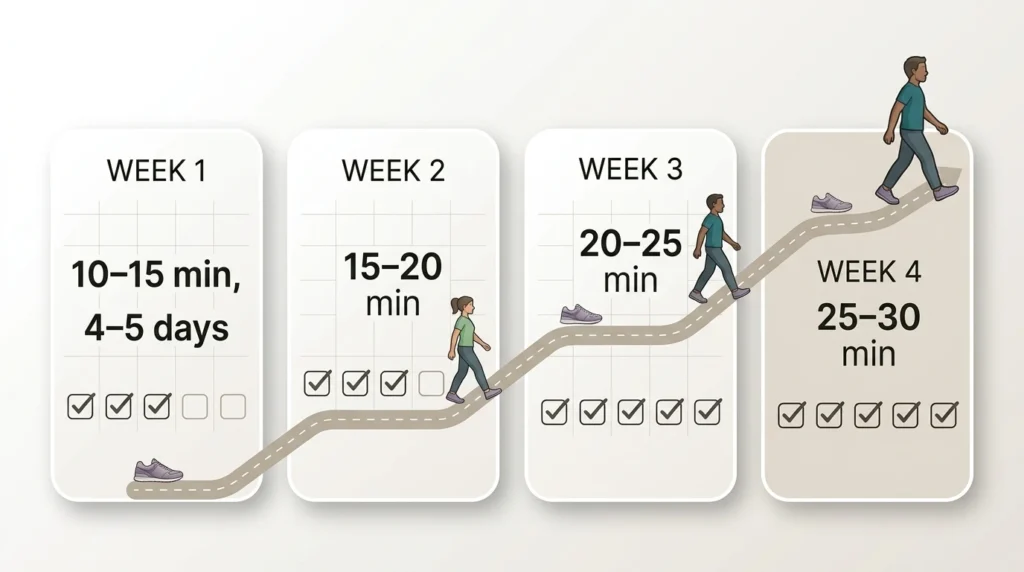
Week 1
Walk for 10–15 minutes, 4–5 days during the week.
Focus on getting comfortable with the habit.
Week 2
Increase your walks to around 15–20 minutes when comfortable.
Week 3
Aim for approximately 20–25 minutes on most walking days.
Week 4
Work toward around 25–30 minutes, depending on how your body feels.
This is only an example. You can progress more slowly or quickly depending on your current activity level.
The Golden Rule
Don’t increase your walking time dramatically just because you had a good day.
Gradual progress is easier to maintain and gives your body time to adjust.
Best Times to Go for a Walk
The best time to walk is often the time you can consistently maintain.
Morning
A morning walk can help you start the day with movement.
After Meals
A short walk after eating can be an easy way to add movement to your routine.
During Work Breaks
A 5–15 minute walk can break up long periods of sitting.
Evening
An evening walk can provide a relaxing transition between work and bedtime.
There is no need to choose one “perfect” time. Consistency matters more than the clock.
How to Make Walking More Interesting
Doing the same route every day can eventually become boring.
Try changing things occasionally.
Explore New Routes
Walk through a different street, park, or safe public area.
Listen to Something
Music, podcasts, or an audiobook can make longer walks more enjoyable.
Walk With Someone
A friend or family member can make walking feel more social.
Set Small Goals
Instead of focusing only on steps, try goals such as:
- Walk 5 days this week
- Explore one new route
- Add 5 minutes to your usual walk
- Take a short walking break every afternoon
Common Walking Mistakes to Avoid
Walking is simple, but a few habits can make the experience less comfortable.
Walking Too Much Too Soon
If you suddenly go from very little activity to long daily walks, your body may need more time to adjust.
Increase your activity gradually.
Ignoring Comfortable Footwear
Shoes that fit well can make walking more comfortable, particularly when you’re increasing your walking time.
Focusing Only on Step Count
A step goal can be motivating, but it isn’t the only measure of a useful walking routine.
Pay attention to:
- How often you walk
- How long you walk
- How you feel
- Your pace
- Your overall activity
Forgetting Weather and Safety
Choose appropriate clothing, stay aware of traffic, and avoid unsafe routes.
On very hot days, consider walking during cooler hours and paying attention to hydration.
Walking vs. Other Common Activities
Walking is not the only way to stay active. Different activities offer different experiences.
| Activity | Main Advantage | Difficulty | Equipment Needed |
| Walking | Easy and accessible | Low to moderate | Comfortable shoes |
| Cycling | Good cardiovascular activity | Moderate | Bicycle and safety gear |
| Swimming | Full-body movement | Moderate | Pool and swimwear |
| Jogging | Higher-intensity cardio | Moderate to high | Suitable running shoes |
| Strength Training | Builds muscular strength | Moderate | Weights or resistance equipment |
You don’t have to choose just one. Combining walking with other forms of exercise can create a more varied routine.
Simple Ways to Add More Walking to Your Day
You don’t always need a dedicated workout.
Try adding movement naturally:
- Park farther away from your destination
- Take the stairs when practical
- Walk during phone calls
- Take a short break every hour
- Walk to nearby shops when possible
- Take an evening walk with family
- Choose walking routes for short errands
These small choices can help reduce the amount of time you spend sitting.
Frequently Asked Questions
1. Is walking every day good for you?
Walking regularly can be an excellent way to stay physically active. It can support cardiovascular fitness, endurance, mood, and general physical well-being.
2. How many minutes should I walk each day?
There isn’t one required number for everyone. A useful general target for adults is at least 150 minutes of moderate-intensity activity per week, which can include brisk walking.
3. Is 30 minutes of walking a day enough?
Thirty minutes of moderate walking on five days of the week would add up to 150 minutes. This is a common weekly physical-activity target for adults.
4. Can walking help with weight loss?
Walking increases physical activity and uses energy, so it can support weight management. However, weight changes depend on several factors, including diet, overall activity, sleep, and individual circumstances.
5. Is walking better than running?
Neither is automatically better. Running generally provides higher-intensity exercise, while walking is easier for many people to maintain. The best choice depends on your fitness level, goals, and preferences.
6. Can I walk if I am a beginner?
Yes. Walking is often a practical starting point for people who are new to regular physical activity. Begin with a comfortable duration and gradually increase it.
7. Is walking after eating a good idea?
A gentle walk after a meal can be a convenient way to add movement to your day. Keep the pace comfortable, especially if you have just eaten.
8. Do I need to walk 10,000 steps every day?
You don’t have to reach exactly 10,000 steps to benefit from being active. A person’s useful activity level depends on their current habits, health, and goals. Focus on gradually becoming more active rather than treating one step number as a requirement.
9. Can walking improve sleep?
Regular physical activity can be part of a healthy sleep routine, and some people find that walking helps them relax. If exercising late affects your sleep, try walking earlier in the day.
10. When should I stop walking?
Stop and seek appropriate medical advice if you experience unusual or severe symptoms such as chest pain, severe shortness of breath, fainting, or significant dizziness during physical activity.
Conclusion
Walking may be one of the simplest ways to add more movement to your life, but simple doesn’t mean insignificant.
A regular walking routine can support cardiovascular fitness, physical endurance, mood, stress management, and healthy weight management. It can also be much easier to maintain than a complicated exercise program.
You don’t need to start with long walks or a strict step target. Begin with a comfortable amount, make it part of your routine, and gradually increase your activity as you become more comfortable.
Put on your shoes, take your first few steps, and build from there.