

Why Is Sleep Important for Your Health?
Sleep is more than just a time to rest after a busy day. While you are asleep, your body and brain continue working on important processes that help you feel refreshed and ready for the next day.
Getting enough quality sleep can support your mood, concentration, physical performance, and overall well-being. On the other hand, regularly getting too little sleep can make everyday tasks feel more difficult and may affect your health over time.
The good news is that improving your sleep does not always require major changes. A consistent schedule, a comfortable sleep environment, and a relaxing bedtime routine can make a noticeable difference.
In this article, we’ll explore why sleep is important for your health, how much sleep you may need, what can happen when you don’t get enough, and simple ways to improve your sleep routine.
Why Is Sleep Important?
Sleep gives your body an opportunity to recover while your brain processes information and prepares for the next day.
Good sleep supports several areas of your everyday life, including:
- Energy and physical performance
- Memory and concentration
- Mood and emotional well-being
- Normal immune function
- Recovery after daily activities
- Healthy routines and productivity
Sleep isn’t simply about the number of hours you spend in bed. Sleep quality and consistency matter too.
7 Important Benefits of Getting Enough Sleep

1. Supports Memory and Learning
Your brain remains active while you sleep. Sleep plays an important role in processing and organizing information you’ve encountered during the day.
Getting enough rest can make it easier to focus, learn new things, and remember information.
Why This Matters
If you’re studying, working, or learning a new skill, regularly sacrificing sleep may make it harder to concentrate the following day.
2. Helps Improve Mood
Have you ever noticed that everything feels a little harder after a poor night’s sleep?
Lack of sleep can affect your mood and patience. A consistent sleep routine can help you feel more refreshed and emotionally prepared for the day.
A Simple Habit
Instead of staying up late every night, try going to bed and waking up at roughly the same time.
3. Supports Physical Recovery
Your body uses sleep as part of its normal recovery process.
This is particularly important if you exercise, play sports, or have physically demanding days.
After Exercise
Good sleep can complement:
- Regular physical activity
- Balanced nutrition
- Adequate hydration
- Rest days
Sleep shouldn’t be treated as an optional part of a healthy lifestyle.
4. Supports Your Immune System
Your body needs adequate rest to maintain normal immune function.
Rather than looking at sleep as a way to “boost” your health overnight, think of it as one of the regular habits that helps your body function normally.
A balanced lifestyle that includes sufficient sleep, nutritious food, and physical activity provides a stronger foundation for overall wellness.
5. Helps With Focus and Productivity
When you’re well rested, everyday tasks can feel easier.
Good sleep can support:
- Attention
- Decision-making
- Problem-solving
- Reaction time
- Mental alertness
This is especially useful when you have a busy work or study schedule.
6. Supports Healthy Daily Routines
Sleep affects more than your bedtime.
When you’re exhausted, you may find it harder to stay active, prepare healthy meals, or maintain other positive habits.
A regular sleep schedule can make the rest of your daily routine easier to manage.
7. Gives Your Body Time to Rest
Your body goes through a variety of processes during sleep. Giving yourself enough time to rest allows your body to move through its normal sleep cycles.
Instead of treating sleep as time you’re “losing,” think of it as time you’re investing in tomorrow.
How Much Sleep Do You Need?
Sleep requirements vary by age. The following general recommendations are from the American Academy of Sleep Medicine and the American Academy of Pediatrics, with adults generally needing at least 7 hours of sleep per night on a regular basis.
| Age Group | General Sleep Recommendation |
| Newborns | 14–17 hours |
| Infants | 12–16 hours, including naps |
| Toddlers | 11–14 hours, including naps |
| Preschool children | 10–13 hours, including naps |
| School-age children | 9–12 hours |
| Teenagers | 8–10 hours |
| Adults | 7 or more hours |
| Older adults | 7–8 hours |
These are general recommendations. Individual sleep needs can vary, and sleep quality is also important.
What Happens When You Don’t Get Enough Sleep?
One late night isn’t necessarily a major problem. The bigger concern is regularly getting less sleep than your body needs.
You may notice short-term effects such as:
- Feeling tired during the day
- Difficulty concentrating
- Reduced alertness
- Irritability
- Slower reactions
- Trouble remembering things
- Lower motivation
If poor sleep becomes a regular pattern, it can become more difficult to maintain healthy daily routines.
Don’t Ignore Persistent Sleep Problems
If you regularly have trouble falling asleep, frequently wake during the night, or remain very tired despite getting enough time in bed, it may be worth discussing the problem with a healthcare professional.
Sleep Quality vs. Sleep Quantity
Getting enough hours is important, but quality matters too.
For example, spending eight hours in bed but waking up repeatedly may leave you feeling less refreshed than expected.
Good Sleep Usually Means
- Getting enough total sleep
- Having relatively uninterrupted sleep
- Following a reasonably consistent schedule
- Feeling rested after waking
This is why simply counting hours doesn’t always tell the whole story.
10 Simple Tips for Better Sleep
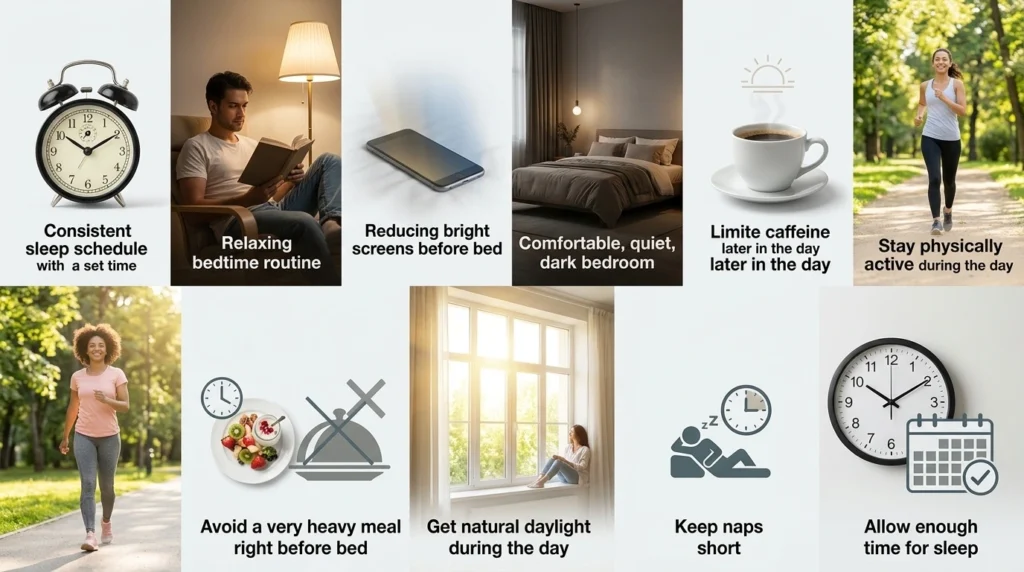
1. Keep a Consistent Sleep Schedule
Try to go to bed and wake up around the same time each day, including weekends when practical.
A consistent schedule helps your body develop a predictable routine.
2. Create a Relaxing Bedtime Routine
Give yourself some quiet time before going to bed.
You could:
- Read a book
- Take a warm shower
- Listen to calm music
- Practice gentle breathing
- Prepare your clothes for the next day
The goal is to help your mind transition from daytime activity to rest.
3. Reduce Bright Screens Before Bed
Phones, tablets, computers, and televisions can keep you engaged when you’re trying to wind down.
If possible, reduce screen use before bedtime or keep your phone away from your bed.
4. Make Your Bedroom Comfortable
Your sleeping environment can affect how easily you relax.
Try to keep your bedroom:
- Quiet
- Comfortable
- Dark enough for sleeping
- At a comfortable temperature
- Free from unnecessary distractions
5. Be Careful With Caffeine
Coffee, tea, energy drinks, and some other beverages contain caffeine.
Because caffeine can stay in your system for several hours, having it too late in the day may make falling asleep more difficult for some people.
6. Stay Active During the Day
Regular physical activity can be part of a healthy sleep routine.
Walking, cycling, stretching, or other forms of exercise can help you stay active during the day.
If intense exercise close to bedtime makes it harder for you to relax, move your workout earlier.
7. Don’t Eat a Very Heavy Meal Right Before Bed
Large meals immediately before bedtime may make some people feel uncomfortable.
If you’re hungry in the evening, a light snack may be easier to manage than a very large meal.
8. Get Natural Light During the Day
Spending time outdoors during daylight can help you maintain a healthy day-and-night routine.
A morning walk is a simple way to combine daylight with physical activity.
9. Keep Naps Short if They Affect Nighttime Sleep
Naps can be useful for some people, but long or late naps may make it harder to fall asleep at night.
If you notice this happening, consider shortening your nap or taking it earlier.
10. Give Yourself Enough Time to Sleep
One of the simplest sleep improvements is also one of the easiest to overlook: make sleep a priority in your schedule.
If you need to wake up early, work backward from your wake-up time and allow enough time for sleep.
A Simple Nighttime Routine
You don’t need a complicated routine. Try something like this:
1 Hour Before Bed
Reduce demanding work and start winding down.
30 Minutes Before Bed
Put away unnecessary screens and prepare your bedroom.
Before Getting Into Bed
Read, relax, or do another quiet activity.
At Bedtime
Keep the room comfortable, dark, and quiet and allow yourself enough time to sleep.
The exact routine doesn’t have to look the same every night. Consistency is more important than perfection.
Common Sleep Mistakes to Avoid
Sometimes the habits we don’t notice are the ones affecting our sleep.
Try to avoid:
- Keeping an irregular sleep schedule
- Drinking too much caffeine late in the day
- Working in bed every night
- Spending hours on your phone before sleeping
- Taking long naps late in the afternoon
- Ignoring persistent sleep problems
You don’t need to change everything at once. Start with the habit that seems easiest to improve.
Sleep and a Healthy Lifestyle
Sleep works together with other healthy habits.
A balanced lifestyle can include:
- Regular physical activity
- Nutritious meals
- Enough water
- Stress-management techniques
- Consistent sleep
- Time for relaxation
Think of these habits as pieces of the same puzzle rather than separate health goals.
Frequently Asked Questions
1. How many hours of sleep do adults need?
Most adults should get 7 or more hours of sleep per night on a regular basis. Individual needs can vary.
2. Is 6 hours of sleep enough?
For most adults, regularly getting only 6 hours is below the commonly recommended amount. If you’re consistently sleeping that little, consider adjusting your schedule to allow more time for sleep.
3. Why am I tired even after sleeping?
Feeling tired despite spending enough time in bed can have several possible causes, including poor sleep quality, an inconsistent schedule, stress, or an underlying health or sleep problem.
If this happens regularly, speak with a healthcare professional.
4. Is using your phone before bed bad for sleep?
Phone use can make it harder to wind down because of the light, stimulation, and engaging content. Reducing screen use before bedtime may help create a more relaxing routine.
5. Is it okay to sleep more on weekends?
Sleeping longer occasionally may help you recover from a late night, but regularly changing your sleep schedule can make your routine less consistent.
A fairly regular schedule is generally a better approach.
6. Can exercise help you sleep better?
Regular physical activity can be part of a healthy sleep routine. However, some people find that intense exercise immediately before bed makes it harder to relax.
7. Should I drink coffee at night?
Caffeine can interfere with sleep, particularly when consumed later in the day. If you have trouble sleeping, consider limiting caffeine in the afternoon and evening.
8. What is the best sleeping position?
There isn’t one sleeping position that is best for everyone. Comfort, personal preference, and individual health needs can all influence which position works best.
9. How can I fall asleep faster?
A consistent bedtime, a relaxing pre-sleep routine, a comfortable room, and reducing stimulating activities before bed may help. If you regularly struggle to fall asleep, talk to a healthcare professional.
10. When should I talk to a doctor about sleep problems?
Consider seeking professional advice if sleep problems happen regularly, interfere with your daytime activities, or leave you consistently tired despite allowing enough time for sleep.
Conclusion
Sleep is one of the simplest parts of a healthy lifestyle, but it is also easy to push aside when life gets busy.
Getting enough quality sleep can support your memory, concentration, mood, physical recovery, and everyday energy. Rather than trying to completely transform your routine overnight, start with a few practical changes.
Set a consistent bedtime, create a relaxing evening routine, reduce unnecessary screen time, stay active during the day, and give yourself enough time to rest.
Good sleep isn’t wasted time. It’s an important part of taking care of yourself.